
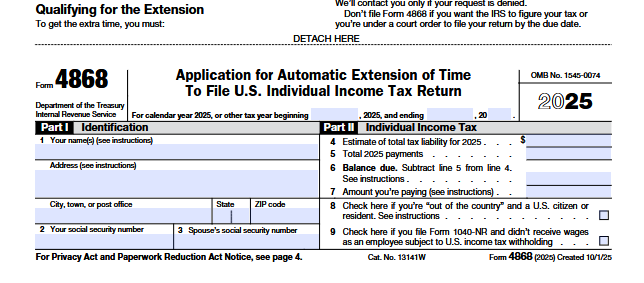
Should you request the automatic extension of time to file your tax return with the IRS? What is the specific process to obtain the extension, and what does a U.S. taxpayer need to know about this important right?
The decision to file an extension is often mistaken for a lack of preparation or procrastination. In reality, for many taxpayers, it is a strategic maneuver designed to ensure accuracy, protect legal options, and maintain a principled, strategic approach to financial management. As the April 15 deadline approaches tomorrow, understanding the actual mechanics of the extension process, the reasoning behind an extension, and the responsibilities that remain is essential for avoiding unnecessary penalties and potential issues and challenges with the IRS itself.
The Purpose of the Extension
The Internal Revenue Service (IRS) provides an automatic six-month extension for taxpayers who require more time to gather documentation or resolve issues or inaccuracies within their financial records. By filing Form 4868, Application for Automatic Extension of Time To File U.S. Individual Income Tax Return, the filing deadline shifts from April 15 to October 15.
This is not a request that the IRS must “approve” based on merit; it is an automatic right afforded to U.S. taxpayers who submit the form by the original filing date.
Why Extending Your Time to File Can Be a Sound Strategy
Accuracy is the primary defense against future issues and a key factor in reducing audit risk with the IRS. Filing a rushed return based on incomplete or inaccurate data, such as missing K-1s from partnerships, corrected 1099s, or complex investment statements, increases the probability of errors.
As an experienced domestic and international tax attorney, I can tell you it is preferable to file once with complete information than to file a hurried return followed by an amended return (Form 1040-X). Amendments often draw closer scrutiny and can create a fragmented history of your tax compliance. An extension provides the “breathing room” necessary to conduct a thorough review, ensuring that every deduction is substantiated and every disclosure is precise.
The Impact on Audit Risk
I are often asked whether an extension request creates a “red flag” to the IRS, thereby increasing the likelihood of an audit. In reality, the data and historical patterns suggest the opposite.
The IRS audit selection process is largely driven by automated scoring systems (Discriminant Inventory Function) that look for anomalies, missing income, unreported or under-reported digital currency holdings or offshore assets and income, or disproportionate deductions relative to income levels. Filing an extension does not change these variables. In fact, many tax attorneys argue that an extension may slightly decrease risk because it allows the taxpayer to wait for all third-party reporting (such as corrected 1099s) to be finalized, ensuring the return matches the IRS’s records exactly.
The Critical Issue in the Automatic Extension of Time to File Your Tax Return with the IRS: Filing vs. Paying
The most significant risk associated with an extension is the failure to distinguish between the time to file and the time to pay.
An automatic extension of time to file your tax return with the IRS is not an extension of time to pay taxes owed. The IRS expects the total tax liability to be paid by the April 15 deadline. If you anticipate owing a balance, calculate an estimate and submit that payment along with Form 4868.
Failure to pay at least 90% of your actual tax liability by the April 15 deadline typically results in late-payment penalties and interest. These costs accrue from the original due date until the date of complete payment. By paying your estimated balance now, you protect against the future economic risk of avoidable penalties and interest charges.
Moving Forward
If you find that your documentation is incomplete or that your situation requires a deeper level of analysis or work to ensure accuracy, filing for an extension can be the right choice.
You can submit Form 4868 electronically or via U.S. mail. Once submitted, your focus should shift from the pressure of the deadline to preparing a full, thorough, and accurate return. Use the additional months to work with your tax attorney, Janathan Allen, to verify all information and financial information and reporting, and ensure that when the return is finally submitted, it stands as a complete and accurate reflection of your financial year. Preparation today prevents the instability of corrections tomorrow, and the risks of an IRS investigation or audit in your future.
We invite you to learn more about the integrated tax, legal, accounting and business consulting services of Allen Barron and contact us or call today to schedule a free consultation at 866-631-3470.