

Welcome. Before You Begin:

Understanding your international corporate ownership, cross-border business structure, subsidiary operations, tax obligations, or reporting requirements requires focus. We are here to help. As you evaluate the information below, you remain in complete control of your timeline and decisions.
If this material confirms a risk, raises a concern, or if you require immediate clarification, there are multiple ways to easily connect with us for free insight to learn more. You do not need to interrupt your reading or navigate away from this page to secure that guidance:
- Direct Phone Access: Our phone number is anchored in the upper right menu.
- Continuous Chat Support: Actively present on your screen for immediate connection.
- Secure Inquiry: The “Contact Us” menu option above is a direct, private way to connect with us or request a free consultation.
This firm provides a substantive, confidential consultation at no cost. You are invited and encouraged to read the material ahead to orient yourself. When you’re ready to ask questions, or discuss the specific facts of your situation, we invite you to reach out.
International Corporate Ownership and Subsidiaries: Understanding Your Cross-Border Business Structure
Whether you are a U.S. business preparing to establish operations abroad, a foreign company investing in the United States, or an owner managing an existing international group of companies, the decisions you make about corporate ownership and subsidiaries can affect far more than where your business is registered.
The legal form of each entity, its ownership and control, where business activities take place, how income is earned and transferred, and how transactions are recorded can all influence your tax obligations, reporting requirements, and ability to accomplish your business objectives. A structure that appears straightforward from a commercial perspective may create legal, tax, accounting, and compliance consequences in more than one jurisdiction.
You may be considering a new subsidiary, evaluating an acquisition, establishing a joint venture, or deciding how to conduct business through an existing foreign entity. You may already have international operations and questions about intercompany transactions, foreign income, required filings, or the movement of funds between related companies. You may also be reviewing a structure that was established years ago and no longer reflects the way your business operates.

You Are on the Right Page If You Need to Understand How Your International Business Should Be Structured, Taxed, and Managed
This page is intended for business owners, executives, foreign investors, and financial professionals who need to understand the relationships between international corporate ownership, subsidiary operations, and U.S. tax obligations. It addresses both outbound structures, in which U.S. persons or businesses own or operate foreign entities, and inbound structures, in which foreign persons or businesses own or operate entities in the United States.
The questions are often interconnected. The entity you choose may affect how income is taxed. Ownership percentages and control may determine reporting obligations. Intercompany agreements and accounting records may influence how transactions are treated. Employees, management activities, and contracts may create obligations in jurisdictions where the business did not anticipate a taxable presence. Changes in ownership or operations may require the structure to be reviewed again.

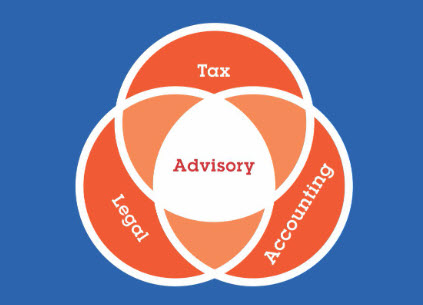
Allen Barron provides integrated legal, tax, accounting, and consulting services to help clients understand these relationships and coordinate their international business decisions. Our work may involve evaluating a proposed structure, reviewing an existing arrangement, addressing cross-border tax and reporting questions, or helping a business prepare for a significant change in its international operations.
The objective is not simply to establish an entity or complete a required filing. It is to understand how the structure functions as a whole, identify the obligations and risks associated with it, and make informed decisions that support the business’s present needs and future objectives.
The following situations may help you recognize where you are in the process and the questions that deserve attention before you move forward.
You Are Planning to Establish or Expand a Business Across Borders
You are considering a new international business structure and need to understand how the ownership, operations, and responsibilities of each entity will fit together.
- Your U.S. business is preparing to establish a subsidiary or other business presence in another country.
- A foreign company or investor is considering establishing or acquiring a business entity in the United States.
- You are evaluating whether to operate through a branch, subsidiary, joint venture, or another ownership arrangement.
- You are discussing where employees, management, contracts, assets, or business activities will be located.
- You have received advice about forming an entity but still have questions about how the overall structure will operate.

Your International Companies Are Operating, but the Structure Is Becoming Difficult to Manage
You have established cross-border operations and are finding that the relationships between your companies, transactions, and accounting systems require greater coordination.
- Your parent company and subsidiaries regularly transfer funds, goods, services, or other assets between them.
- You are uncertain whether intercompany agreements accurately reflect the way the businesses operate.
- Your accounting team is having difficulty reconciling transactions or balances between related entities.
- Employees, management, or business activities are located in countries that were not part of the original plan.
- Your existing ownership or operating structure no longer reflects the size, activities, or objectives of the business.

You Are Unsure How Your Foreign Ownership or Income Will Be Taxed
You own or control an international business interest and have questions about how foreign income, distributions, or transactions may affect your U.S. tax obligations.
- You have received income or distributions from a foreign company and are uncertain how they should be treated.
- Your business has earned profits abroad, but you do not understand whether those earnings affect your current U.S. tax position.
- You are considering transferring funds between a foreign subsidiary and its U.S. parent or owners.
- You have questions about foreign taxes paid, withholding, or whether an applicable tax treaty affects your situation.
- Your accountant or financial advisor has raised questions about the tax treatment of your foreign ownership or intercompany transactions.

You Have Discovered International Reporting Requirements or Possible Missing Filings
You have learned that your foreign ownership, business activities, accounts, or transactions may involve reporting obligations that you do not fully understand.
- Your accountant or tax preparer has asked for additional information about a foreign corporation or subsidiary.
- You have been told that your ownership interest may require an international information return.
- You are uncertain whether foreign accounts, intercompany transactions, or changes in ownership have been properly reported.
- You have discovered that records or filings from prior years may be incomplete or missing.
- You have received a notice or request for information concerning an international tax or reporting matter.

Establishing or Expanding a Business Across Borders Requires a Coordinated Structure
A U.S. business expanding into another country, or a foreign business establishing operations in the United States, must consider more than the formation of a new legal entity. The ownership arrangement, intended business activities, management responsibilities, and relationships between the companies should be evaluated together. A subsidiary, branch, joint venture, or other arrangement may serve different business objectives and produce different legal, tax, accounting, and reporting consequences.
The appropriate structure depends upon the nature of the business, the jurisdictions involved, the location of employees and management, the ownership and control of each entity, and how funds, goods, services, or intellectual property will move between the companies. Decisions made during formation may also affect future financing, distributions, changes in ownership, and the ability to restructure or exit an investment. The objective is to establish a structure that supports the business’s actual operations rather than selecting an entity first and attempting to resolve the consequences afterward.
Allen Barron’s integrated legal, tax, accounting, and consulting services allow these considerations to be evaluated as related parts of an international business strategy. Our professionals can assist with reviewing the proposed ownership arrangement, identifying relevant U.S. tax and reporting considerations, coordinating the accounting requirements, and evaluating how the structure will support the company’s business objectives. Where foreign law or local requirements are involved, appropriate coordination with professionals in the relevant jurisdiction may also be necessary.
The Next Action Step
Before forming an entity, acquiring an ownership interest, or committing to a particular operating arrangement, it is useful to establish a clear understanding of the proposed business activities and the relationships between the entities. This includes identifying the owners, the intended location of management and employees, the assets and contracts involved, anticipated intercompany transactions, and how the business expects to earn and distribute income.
Our experienced international tax attorney, Janathan Allen, can help you evaluate the proposed structure in coordination with the legal, accounting, and business considerations that may affect its implementation. The purpose is to understand the available options, identify questions that require additional information, and develop an appropriate sequence of decisions before substantial commitments are made.
We invite you to a complimentary and substantive conversation regarding your situation, objectives, and concerns. You can reach out through the chat module on this page, our contact form, or by calling (866) 631-3470.
It is important to understand where you are, what information is available, what information may be missing, your options moving forward, and the most productive and effective steps you can take to protect your interests and accomplish your objectives.
Coordinating the Operations of an Existing International Corporate Structure
An international corporate structure may become more complicated as a business grows, enters new markets, adds employees, or develops additional relationships between its companies. An arrangement that was appropriate when operations began may no longer reflect where decisions are made, how services are provided, how assets are used, or how income and expenses are allocated. These changes can create uncertainty even when the underlying business is operating successfully.
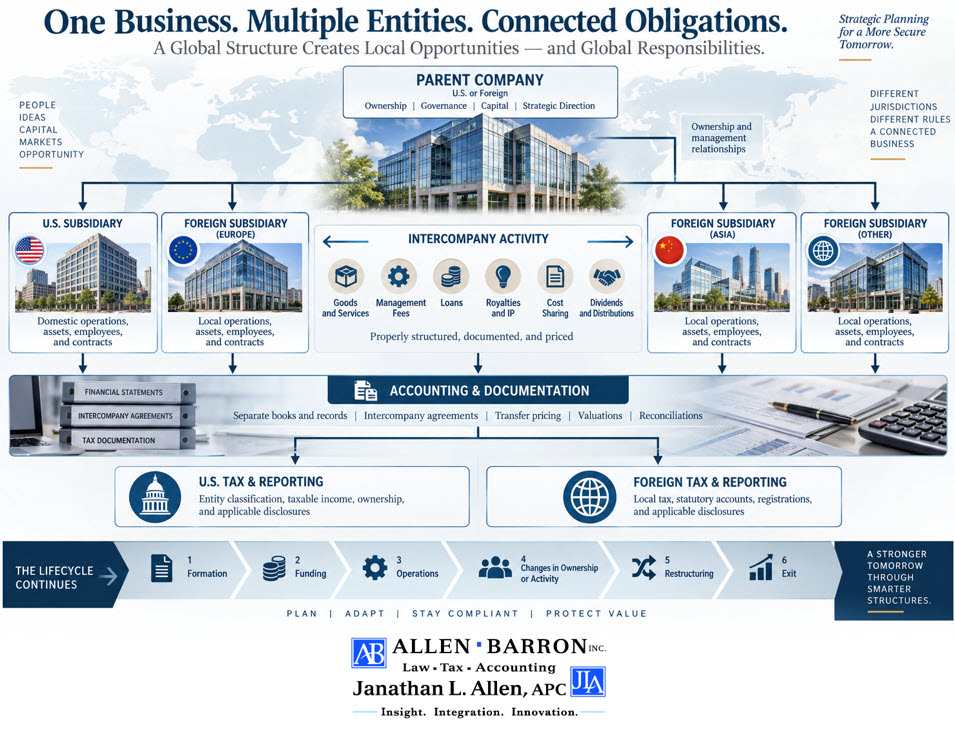
Intercompany transactions deserve particular attention. Payments for services, inventory, financing, intellectual property, and other arrangements should be supported by appropriate agreements and accounting records that reflect the actual business relationships. The treatment of these transactions may affect the tax positions of more than one entity or jurisdiction. Changes in management, employees, or business activities may also require review of the company’s existing assumptions about where it conducts business and incurs obligations.
The goal is to bring the legal structure, actual operations, accounting records, and tax treatment into a coherent and supportable relationship. Allen Barron can assist with evaluating the existing ownership and operating arrangements, reviewing intercompany relationships, and coordinating legal, tax, accounting, and consulting considerations. This may involve identifying gaps in documentation, understanding how transactions have been recorded, and determining whether changes to the structure or its administration should be considered.
The Next Action Step
A productive review begins with an accurate picture of how the international group actually operates. Relevant information may include organizational charts, ownership records, intercompany agreements, financial statements, transaction histories, management responsibilities, employee locations, and the business purpose of each entity. Existing records should be preserved and reviewed before agreements, accounting treatments, or ownership arrangements are changed.
Our experienced international business and tax attorney, Janathan Allen, can work with the appropriate accounting and business professionals to identify the issues that require attention and help establish a coordinated plan. The first objective is to understand the existing structure and its consequences, rather than assuming that every difference between the original plan and current operations requires the same solution.
We invite you to a complimentary and substantive conversation regarding your situation, objectives, and concerns. You can reach out through the chat module on this page, our contact form, or by calling (866) 631-3470.
It is important to understand where you are, what information is available, what information may be missing, your options moving forward, and the most productive and effective steps you can take to protect your interests and accomplish your objectives.
Understanding the U.S. Tax Consequences of Foreign Corporate Ownership and Income
Foreign corporate ownership can create U.S. tax questions that are not resolved simply by determining where a company is incorporated or whether profits have been distributed. The tax treatment may depend upon the identity and status of the owners, the classification of the entity, ownership and control, the nature of the income, and the relationships between the foreign company and its U.S. owners or related entities.
A business may need to consider how foreign earnings are treated under applicable U.S. tax rules, whether foreign taxes may be credited, and how dividends, distributions, royalties, interest, or other payments are treated when funds move across borders. Tax treaties and withholding requirements may also be relevant. These issues should be evaluated in the context of the particular ownership arrangement and transactions rather than assuming that the same treatment applies to every foreign subsidiary or international investment.
Understanding the tax consequences of foreign ownership requires distinguishing the taxation of the entity, the taxation of its owners, and the treatment of transactions between related parties. Allen Barron can assist with reviewing the ownership structure, relevant financial information, foreign tax treatment, and applicable U.S. tax considerations. Our integrated approach also allows tax planning to be coordinated with the accounting records and business decisions that support the structure.
The Next Action Step
Before making a significant distribution, transferring funds between related companies, changing an ownership arrangement, or relying upon a particular tax treatment, it is important to understand the relevant facts. These may include the ownership history, entity classifications, financial statements, foreign taxes paid, prior U.S. tax filings, intercompany transactions, and the intended purpose of the proposed payment or change.
Our experienced international business and tax attorney, Janathan Allen, can help you identify the questions that require analysis and coordinate the necessary tax and accounting review. This provides a basis for evaluating available options and understanding the potential consequences before a transaction is completed or a tax position is adopted.
We invite you to a complimentary and substantive conversation regarding your situation, objectives, and concerns. You can reach out through the chat module on this page, our contact form, or by calling (866) 631-3470.
It is important to understand where you are, what information is available, what information may be missing, your options moving forward, and the most productive and effective steps you can take to protect your interests and accomplish your objectives.
Reviewing International Reporting Requirements and Possible Missing Filings
International corporate ownership may involve information reporting obligations in addition to the calculation and payment of income tax. The applicable requirements can depend upon the type of entity, the identity and ownership interests of U.S. persons, changes in ownership, transactions with related parties, and other facts. A business or owner may therefore have reporting questions even when the foreign entity has not distributed profits or the taxpayer does not believe additional U.S. tax is due.
This page discusses Form 5471 and the importance of understanding foreign corporate ownership and reporting responsibilities. Depending upon the circumstances, other international information returns, foreign account reporting, or related disclosures may also require consideration. The appropriate analysis should distinguish the obligations of the entity from those of its owners and should review the relevant tax years, ownership history, transactions, and records before determining what may be required.
A possible missing filing is a reason to establish the facts and evaluate the available options, not to assume that a violation has occurred or that a particular penalty or corrective procedure applies. Allen Barron can assist with reviewing the structure and prior reporting, identifying the information needed to evaluate applicable requirements, and coordinating legal and accounting considerations. Where an issue is identified, the appropriate response depends upon the circumstances, the relevant requirements, and the available compliance or corrective options.
The Next Action Step
If you have discovered a possible reporting issue or received a notice, preserve the relevant records and establish which entities, owners, accounts, transactions, and tax years may be involved. Useful materials may include organizational charts, ownership records, prior tax returns and information returns, financial statements, foreign account records, correspondence, and documents reflecting changes in ownership or operations.
Before submitting additional information, amending filings, or selecting a corrective approach, our experienced international business and tax attorney, Janathan Allen, can help you evaluate the circumstances and coordinate the necessary accounting review. The objective is to understand what was required, what was actually reported, what information may be missing, and the available options for addressing any identified issue.
We invite you to a complimentary and substantive conversation regarding your situation, objectives, and concerns. You can reach out through the chat module on this page, our contact form, or by calling (866) 631-3470.
It is important to understand where you are, what information is available, what information may be missing, your options moving forward, and the most productive and effective steps you can take to protect your interests and accomplish your objectives.
THE MOST IMPORTANT THING YOU NEED TO KNOW RIGHT NOW

The most consequential decisions in international corporate ownership often occur before a subsidiary is formed, a transaction is completed, funds are transferred, or an existing structure is changed. Once a business has established operations across borders, its legal relationships, tax treatment, accounting records, and reporting obligations may become more difficult to adjust. The most important thing you can do right now is understand how your proposed or existing structure actually works before making decisions that may limit your options.
Whether you are planning an international expansion, managing an established group of companies, evaluating foreign income, or addressing a possible reporting issue, the first priority is to establish the relevant facts. This includes understanding who owns and controls each entity, where business activities take place, how transactions are conducted, what records exist, and which decisions or deadlines may require attention. You do not need to resolve every technical question immediately, but you should understand which questions matter before proceeding.


Understand the Structure Before You Establish or Change It
If you are considering forming a subsidiary, acquiring an international business interest, establishing a joint venture, or changing an existing ownership arrangement, the order of decisions matters. The legal form of an entity should be evaluated in relation to its intended activities, ownership and control, management, financing, and anticipated transactions.
A structure that appears appropriate for one business purpose may produce different tax, accounting, or reporting consequences than expected. Before committing to an arrangement, it is important to understand how the entities will relate to one another and whether the proposed structure supports both your immediate objectives and the business’s anticipated development.
Preserve and Review the Records That Explain How Your Companies Operate
For an existing international business, the most useful starting point is often a clear picture of the current structure and its actual operations. Organizational charts, ownership records, formation documents, intercompany agreements, financial statements, transaction histories, and prior tax filings may all help establish how the business has been organized and administered.
These records can also reveal differences between the original plan and the way the companies now operate. Before changing agreements, transferring assets, adjusting accounting treatment, or reorganizing entities, it is important to understand the existing relationships and preserve the information necessary to evaluate them. A coordinated review can help identify what is working, what may require attention, and which changes should be considered.

Do Not Assume That Foreign Income, Distributions, or Reporting Obligations Can Be Evaluated in Isolation

The tax treatment of foreign corporate income and cross-border payments may depend upon the ownership structure, entity classification, nature of the income, prior transactions, and other relevant circumstances. Similarly, international reporting obligations may arise from ownership or transactions even when the business has not distributed profits or does not expect additional U.S. tax to be due.
Before making a significant distribution, transferring funds between related companies, adopting a tax position, or responding to a possible reporting issue, it is important to understand the relevant facts and the applicable requirements. This does not mean that every international transaction presents a problem. It means that the appropriate treatment should be determined through an informed review rather than an assumption based upon the location of the company or the movement of funds.
Consider the Timing of Decisions, Filings, and Communications
International business decisions often involve multiple participants, including owners, executives, accountants, legal advisors, financial institutions, and professionals in other jurisdictions. Communications and commitments made before the relevant issues are understood may create confusion or make it more difficult to coordinate an appropriate response.
If you have received a notice, identified a possible missing filing, or are approaching a significant transaction or deadline, establish what is required and when action may be necessary. Preserve relevant correspondence and records, and avoid making unsupported representations or implementing changes before the circumstances have been reviewed. The objective is to respond thoughtfully and within applicable requirements while maintaining a clear understanding of your available options.

Preserve Your Options Before Choosing the Next Course of Action

We invite you to a complimentary and substantive conversation regarding your situation, objectives, and concerns. You can reach out through the chat module on this page, our contact form, or by calling (866) 631-3470.
The Keys to an Effective International Corporate Structure
An effective international corporate structure is not simply a collection of entities established in different countries. It is a coordinated system of ownership, management, business operations, financial transactions, tax treatment, accounting, and reporting obligations. Each component should support the business’s objectives while remaining consistent with the way the companies actually operate.
The following principles provide a framework for evaluating a proposed structure, reviewing an existing international group, or considering significant changes to cross-border operations.
Begin With the Business Purpose and Ownership Structure
The starting point is to understand what the business is intended to accomplish and why each entity is necessary. A U.S. company establishing operations abroad, a foreign investor entering the United States, and an existing international group reorganizing its activities may have very different objectives.
The ownership and control of each entity, the responsibilities of its management, and the relationships between the parent company, subsidiaries, and other related entities should be clearly understood. These considerations influence how the structure is administered and may affect its legal, tax, and reporting consequences.
The structure should be designed around the business purpose, rather than allowing the choice of entity to determine how the business must operate.
Align the Legal Structure With Actual Business Operations
The legal organization of an international business should reflect where and how its activities are conducted. This includes the location of employees and management, the parties entering into contracts, the ownership and use of assets, and the entities responsible for providing goods or services.
As a business expands, its operations may change without corresponding changes to its original structure. New employees, additional markets, different management responsibilities, or changes in the use of intellectual property may create relationships that were not anticipated when the entities were first established.
A periodic review helps determine whether the existing arrangements continue to reflect the business’s actual activities and whether additional legal, tax, accounting, or operational considerations require attention.
Understand the Tax Treatment of Each Entity and Its Owners
International corporate ownership requires consideration of both the entities and the persons or businesses that own them. The legal form of an entity, its tax classification, ownership and control, the nature of its income, and the jurisdictions involved may all influence the applicable tax treatment.
Foreign earnings, distributions, intercompany payments, foreign taxes paid, and changes in ownership should be evaluated in the context of the overall structure. The treatment of income earned by a foreign company may differ from the treatment of funds distributed to its owners, and the tax consequences of a transaction may involve more than one jurisdiction.
Tax planning should be coordinated with the ownership arrangement and actual business activities so that the intended treatment is understood before significant decisions or transactions are completed.
Document and Account for Intercompany Transactions
Related companies frequently exchange goods, provide services, license intellectual property, extend financing, or transfer funds between entities. These transactions are part of the normal operation of many international businesses, but they should be supported by appropriate agreements, financial records, and accounting treatment.
The business purpose of each arrangement, the responsibilities of the participating entities, and the manner in which transactions are priced and recorded should be understood. Inconsistent agreements, incomplete records, or accounting practices that do not reflect actual operations can make it more difficult to evaluate the structure and support its tax treatment.
Coordinating legal documentation, transfer pricing considerations, and accounting systems helps establish a clearer and more reliable record of how the international group conducts business.
Coordinate Reporting, Accounting, and Compliance
International ownership and operations may involve reporting responsibilities for both the entities and their owners. These obligations may depend upon ownership interests, entity classification, transactions, foreign accounts, changes in the structure, and other relevant circumstances.
Accurate accounting records and a clear understanding of the ownership relationships are essential to evaluating applicable requirements. Information maintained by one company or jurisdiction may be necessary to prepare returns or disclosures for another entity or owner. Reporting responsibilities should therefore be considered as part of the structure’s ongoing administration, rather than only when a filing deadline approaches.
A coordinated approach helps the business understand what information must be maintained, who is responsible for providing it, and how legal, tax, and accounting requirements relate to one another.
Plan for Change Before the Structure Changes
International corporate structures are not static. Businesses expand into new markets, add investors, acquire or dispose of interests, change management responsibilities, transfer assets, reorganize operations, and eventually consider succession or exit.
A proposed change should be evaluated in relation to the existing ownership arrangement, tax attributes, intercompany relationships, accounting records, and reporting responsibilities. Decisions that appear straightforward from a commercial perspective may affect other parts of the structure and should be reviewed before implementation.
Planning for change does not require predicting every future development. It requires maintaining a clear understanding of the existing structure and considering how significant decisions may affect the business’s ability to accomplish its objectives.
The Structure Must Function as a Coordinated Whole
The effectiveness of an international corporate structure depends upon the relationships between its components. Ownership determines control and responsibilities. Operations generate income and transactions. Agreements and accounting records document those activities. Tax treatment and reporting obligations arise from the relevant facts and applicable requirements.
When these components are evaluated independently, important relationships may be overlooked. When they are considered together, business owners and executives are better positioned to understand the consequences of their decisions and coordinate the professionals responsible for implementing them.
An international corporate structure is an operating system of legal relationships, business activities, financial transactions, and obligations. The objective is to ensure that the system supports the business’s purposes, reflects its actual operations, and can be properly administered as the business develops.

Integrated Legal, Tax, Accounting, and Business Decisions
International corporate ownership often requires decisions that cross traditional professional boundaries. A legal ownership arrangement may affect tax treatment. A tax planning decision may require changes to accounting systems or intercompany agreements. A business expansion may create new reporting responsibilities or require the existing structure to be reviewed.
Allen Barron’s integrated legal, tax, accounting, and consulting services are designed to help clients address these relationships in a coordinated manner. Our professionals can assist with evaluating proposed structures, reviewing existing international operations, understanding tax and reporting considerations, and coordinating the records and agreements necessary to support the business’s activities.
The objective is to provide business owners, executives, and investors with a clearer understanding of their circumstances and the information necessary to make informed decisions. Whether you are establishing a new international presence, managing an existing group of companies, or considering a significant change, the value of coordinated and integrated professional guidance and services is the ability to evaluate the consequences of a decision across the structure before determining the most appropriate course of action.
We invite you to a complimentary and substantive conversation regarding your situation, objectives, and concerns. You can reach out through the chat module on this page, our contact form, or by calling (866) 631-3470.
You Need Experienced and Integrated Legal, Tax, Accounting, and Business Advisory Counsel When the Stakes Are Significant and International
Janathan L. Allen has decades of experience representing businesses, business owners, investors, and individuals in complex U.S. and international tax matters. Her work includes international corporate ownership and subsidiaries, cross-border business activities, international investments, tax planning, reporting and compliance issues, and matters involving the Internal Revenue Service and California tax authorities.
Her experience encompasses both proactive planning and the resolution of consequential tax controversies. International business matters may involve the establishment of foreign or U.S. entities, the coordination of ownership and operating structures, intercompany transactions, foreign income, and the tax and reporting obligations associated with conducting business across borders.
Allen Barron’s integrated legal, tax, accounting, and business consulting services provide clients with coordinated guidance as they establish, operate, review, or change international corporate structures. Whether you are planning an expansion, managing an existing group of companies, evaluating an international investment, or addressing a potential compliance concern, early consideration of the relevant relationships and obligations may help preserve options, reduce unnecessary exposure, and support informed business and financial decisions.
The initial consultation is a complimentary, substantive, confidential discussion designed to help you better understand your current position, the issues that may require immediate attention, and the strategies that may help protect your financial and business interests moving forward.
You are invited to engage the chat module on this page, contact Allen Barron, or call (866) 631-3470 to schedule a free, substantive consultation.
Learn more about Janathan L. Allen, APC and Allen Barron’s integrated tax, legal, accounting and business consulting services and how an integrated approach may help identify risk, protect assets, reduce unnecessary exposure, and support your long-term business and financial objectives.